Winter tents and shelters for mountaineering, winter backpacking, and backcountry skiing tours need to be stronger and warmer for camping in exposed windy terrain that may be subject to snow loads. We prefer lightweight tents and tarp shelters because no one wants to lug a heavy tent all day when climbing a peak, snowshoeing, or backcountry skiing if it’s avoidable. What follows are our recommendations for winter tents and shelters that can handle moderate snow loads and wind while being lightweight enough to carry comfortably in a backpack.
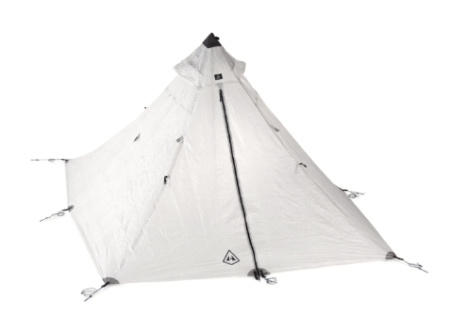
1. Hyperlite Mountain Gear UltaMid 2
The Hyperlite Mountain Gear (HMG) UltaMid 2 is an ultralight floorless single-wall pyramid made with Dyneema Composite Fabrics that has dual peak vents to help mitigate internal condensation. Weighing just 1 lb 3.1 oz, it requires two ski/trekking poles (lashed together) to set up and has a rectangular footprint that is 83″ wide x 107″ long with a peak height of 64″. If your goal is to minimize your gear weight for winter backpacking, mountaineering, or backcountry touring, you can quickly dig out a sleeping area under the UltaMid for a cozy night under the stars.
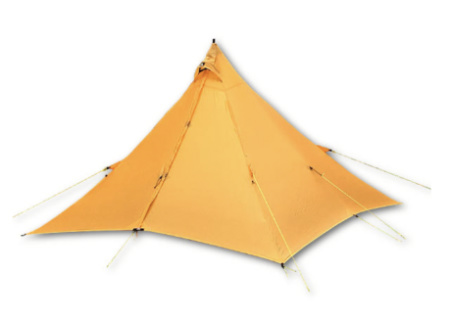
2. Mountain Laurel Designs SuperMid
The Mountain Laurel Designs (MLD) SuperMid is a single-wall, floorless pyramid tarp with a square 9’2″ x 9’2″ footprint with a peak height of 69″. Pyramid tarps are bombproof in wind as long as they’re securely anchored with deadmen or skis in winter. Weighing 1 lb 12 oz, the SuperMid can sleep up to four people, or it can be set up as a protected group kitchen. It has one oversized peak vent for ventilation, a center door zip, and 16 guylines, including 8 perimeter guylines outfitted with linelocs. It can also be pitched with two ski/trekking poles, lashed together.
3. SlingFin Cinder Cone 4P
The SlingFin Cinder Cone 4P is a four-person pyramid tarp that can be used for ultralight backpacking and winter camping. It has a unique venting system that includes two drawstring ceiling vents and base venting so you can reduce internal condensation or cook underneath it without fear of carbon monoxide poisoning (very handy in winter). It also comes with pitching guides that virtually guarantee a perfect pyramid shape each time you set it up. Weighing 1 lb 11 oz, the Cinder Cone is made with durable ripstop Nylon 66 coated with silicone on both sides. Read the SectionHiker Review.
4. Durston X-Dome 1+
The Durston X-Dome 1+ is a spacious double-wall freestanding tent. At just 35 oz (985 g), the X-Dome 1+ sets up fly first and has a diagonal floor plan, providing more covered vestibule space and a longer interior than comparable dome-style tents. Its crossed carbon fiber poles provide a very strong structure capable of holding heavy snow loads. The tent is made with 15d high tenacity polyester so the fly does not stretch when wet. The fly can also be pitched on its own for winter use, reducing the carry weight to 24 oz. Read the SectionHiker Review.
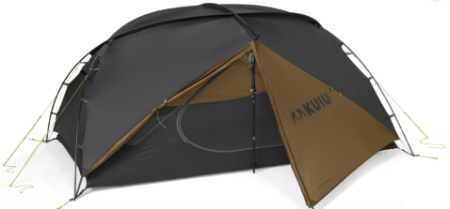
5. KUIU Mountain Star 2
The KUIU Mountain Star is a 2-person freestanding double-wall tent, 3+ season tent with a very strong-sleeved exterior pole design. It has two doors and two vestibules, as well as kickstand vents at the ends to reduce any internal condensation. The tent has three poles, which are available in carbon fiber or aluminum. You can also augment the strength of the vestibule cross pole using trekking poles, which is useful in high winds or heavy snow loads. With a built-in rainfly and bathtub-style floor, the interior stays protected, even during setup and take-down, although you can also set it up without the inner tent to reduce weight. SectionHiker review coming soon.
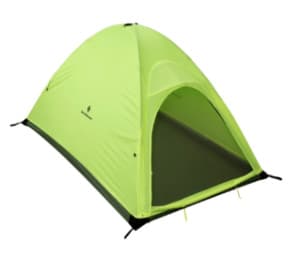
6. Black Diamond FirstLight 2P Tent
The Black Diamond FirstLight is a lightweight 2-person single-wall tent. Weighing just 3 lbs 1 oz (seam-sealed), it’s made with NanoShield single-wall fabric and has a 70-denier polyester floor. It has a front door and a small rear window, with zippered mesh panels at both ends to provide ventilation and spindrift protection. Crossed internal poles make setup fast and easy and provide a strong structure capable of withstanding high winds and snow loads. Seam sealing is recommended. A separate front vestibule is also available. Read the SectionHiker FirstLight Review.
7. Tarptent ArcDome 2 Ultra
The Tarptent ArcDome 2 Ultra is a 3 lb 5.2 oz double-wall freestanding dome tent made with UltraTNT, an ultralight waterproof laminate material in the same class of materials as Dyneema DCF. The ArcDome 2 has two doors and two overhanging vestibules and is a true four-season tent, with the option of having a solid inner or a mesh inner tent for better ventilation in warmer weather. The tent has two carbon-fiber crossing poles that slide into sleeves, making setup easy. In addition, the interior space is offset at a diagonal to provide occupants with more living space.
8. MSR Access 2
The MSR Access 2 is a two-person, double-wall tent that weighs 3 lbs 10 oz. It has two doors and two vestibules that provide excellent livability and gear storage, with a freestanding pole architecture so you can set it up quickly, even on snow. A central support frame and carbon fiber tent poles provide a strong structure for snow loading while remaining lightweight. The solid inner tent is breathable but provides enhanced wind protection to keep you warm on cold winter nights. Read the SectionHiker MSR Access 1 Review.
9. NEMO Kunai 2
The NEMO Kunai 2 is a double-walled four-season tent that weighs 3 lbs 14 oz. It has a solid, breathable inner tent for greater warmth, with large pass-through vents that provide excellent airflow. An aggressive brow pole over the front door provides additional clearance inside the front vestibule, which provides a sheltered entrance and damp gear storage. The Kunai 2 is suitable for year-round use, which is an added bonus.
10. SlingFin Hotbox
The SlingFin HotBox is a lightweight two-person bivy-style tent with extra side vestibule storage designed for use in alpine conditions. Weighing 3 lbs 7.2 oz, it has a breathable nylon canopy that protects occupants against spindrift and wind while keeping condensation to a minimum. Pole sleeves, which SlingFin calls a WebTruss, help to distribute snow loads across a larger surface area and are much stronger than clip-style tents. Two small side vestibules provide added storage not found in comparable tents, such as the Black Diamond First Light, for boots or backpacks, while providing lateral stability in high wind when staked out. The inner tent and fly can also be pre-attached and set up as a single unit in challenging weather conditions. SectionHiker Hotbox Review coming soon.
4-Season (Winter) Tent and Shelter Selection Guide
When evaluating winter tents and tarp shelters, it helps to research the climate conditions you expect to use the tent in, particularly snow loads and wind speeds, as this will inform the degree of tent pole strength and ventilation required.
Tent or Tarp?
Tents are almost always heavier than tarps, but they offer a lot more comfort and protection because they have floors. They can also be much easier to set up if they’re freestanding, so you can get out of the weather quickly and change into dry clothes. While tarps are substantially lighter, they can take a while to set up since you have to freeze your guy-out points in place in snow, a process known as sintering. This can take 20-30 minutes, during which time you’ll get much colder. You have to decide which option best suits your needs.
Pole Architecture
Many winter tents have several crossed poles, anchored inside or outside the tent walls. Exterior poles anchored in sleeves are much stronger than poles that connect to an inner tent via clips or velcro tabs. They’re much more wind-resistant and can withstand heavier snow loads. For tarps, most require one or two poles to set up, although ones with high ceilings may require that you lash two trekking poles together, usually with a flexible ski strap, to attain the proper height.
Guy Out Points
It’s important to secure your tent or tarp to the snow when you set it up so it doesn’t blow away and so the walls don’t collapse under wind pressure. Winter tents typically come with gear loops instead of guylines for this purpose so you can use gear to anchor your tent, like skis, poles, ice axes, etc. If you use snow stakes, it’s important to freeze these in place by packing snow all around them and letting it harden. If there’s no snow on the ground, you’ll have a very hard time pounding regular tent stakes into the frozen ground. When this happens, you’ll quickly realize the advantage of using a freestanding tent.
Ventilation
It is important to minimize and reduce internal condensation. This is achieved by keeping the tent door(s) open when feasible, through peak and side vents, and in some cases through the use of breathable wall fabrics. You can never have too much ventilation in a winter tent or shelter because you’re sleeping on top of water, frozen water. Look for tent doors with mesh screens, as this lets you keep a door open at night for ventilation while blocking snow from blowing into the tent.
Interior Space
Winter tents designed for high alpine mountaineering are often cramped because weight savings are so critical when you have to climb many thousands of feet to reach your destination. When selecting a winter tent, be realistic about your length and width requirements, particularly when choosing a two-person wedge-style tent, as livability can be compromised. Consider purchasing an add-on vestibule if available because they make a good “gear room” for you to store wet or snow-covered gear or to cook and melt snow under (with proper ventilation to prevent carbon monoxide poisoning) if you have to wait out a storm.
Number of Doors
Tents designed to hold two occupants are more comfortable and convenient to use if they have two doors and vestibules because you can come and go without waking your tent partner. Dome-style tents often provide greater covered vestibule storage, which can make a significant difference in livability.
Floorless Shelters
Winter tarps do not have floors in order to save weight. Most people dig into the snow with an avalanche shovel to create “furniture” for sleeping or sitting, and to increase the usable space under the tarp. Some people even cut out the floors in their freestanding tents, including the Black Diamond FirstLight, for the same purpose, because it improves livability.
DCF (Dyneema) Tents and Tarps
While tarp shelters made with DCF (Dyneema Composite Fabrics) are lighter-weight than ones made with silnylon or polyester, snow slides better down the sides of silnylon and polyester shelters because they are slicker, reducing the weight of snow loading on the tent poles/ski poles holding up your tent or tarp. In addition, DCF tarps are much bulkier to pack making them less desirable in winter when backpack space is at such a premium.
SectionHiker never accepts payment for gear reviews or editorial coverage. When you buy through affiliate links on our site, we may earn a small commission at no extra cost to you. Help us continue to test and write unsponsored and independent gear reviews, hiking and backpacking FAQs, and free hiking guides.